How Much Does Video Production Cost in Seattle?
If you’re trying to budget for a video project in Seattle, you’ve probably already realized there’s no one-size-fits-all answer.
Costs can range from a few hundred dollars to tens of thousands, depending on how the project is produced.
But there is a clear way to think about it.
This guide breaks down what video production actually costs, what drives those costs, and how to choose the right approach for your project.
The Short Answer
Most video production projects in Seattle fall into three tiers:
- $500 – $2,000 → Simple, lean productions (often remote or solo operator)
- $2,000 – $10,000 → Small crew commercial or branded content
- $10,000+ → Full-scale commercial production with crew, locations, and post
Where your project lands comes down to one thing: how complex the production is.
What Actually Drives Cost?
Video production isn’t just filming. It’s a system made up of a lot of moving parts:
- Pre-production (planning, scripting, logistics)
- Production (crew, gear, location, talent)
- Post-production (editing, color, sound, graphics)
The more layers you add, the more time, people, and cost are involved.
Tier 1: Lean Video Production ($500 – $2,000)
This is the fastest-growing category, and where a lot of smart brands are moving.
Typical examples:
- Customer testimonial videos
- Social media content
- Founder interviews
- Internal videos
These projects are usually:
- Shot remotely or with minimal crew
- Highly efficient
- Focused on clarity over spectacle
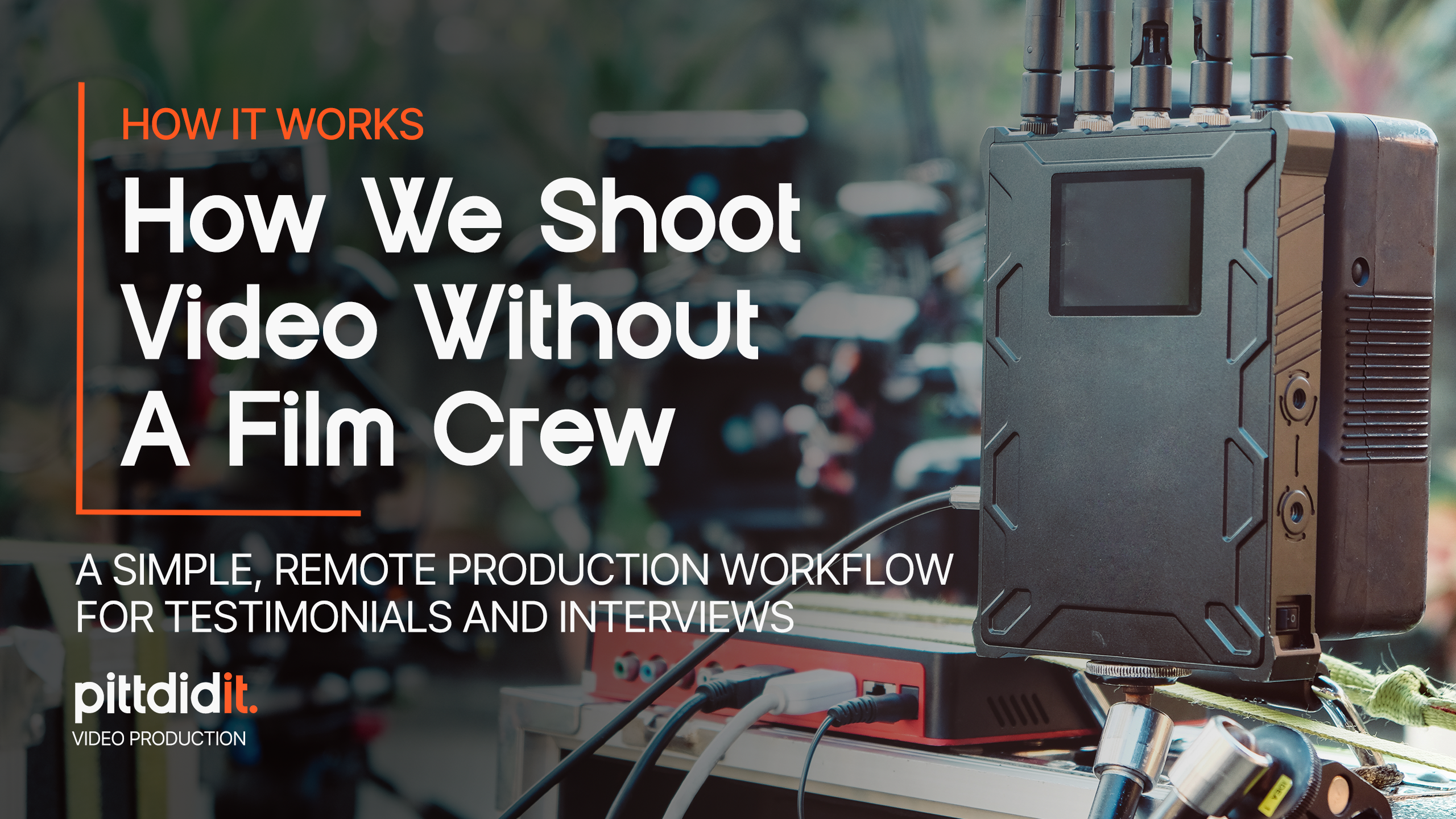
For this type of content, we use Timonial, our sister company focused on remote testimonial and interview production.
We ship a professional video studio directly to the subject, then direct the shoot live over Zoom.
No crew. No travel. Still high-end results.
Tier 2: Small Crew Production ($2,000 – $10,000)
This is your classic lean commercial setup.
Typical examples:
- Branded content
- Product videos
- Company overview videos
What you’re paying for:
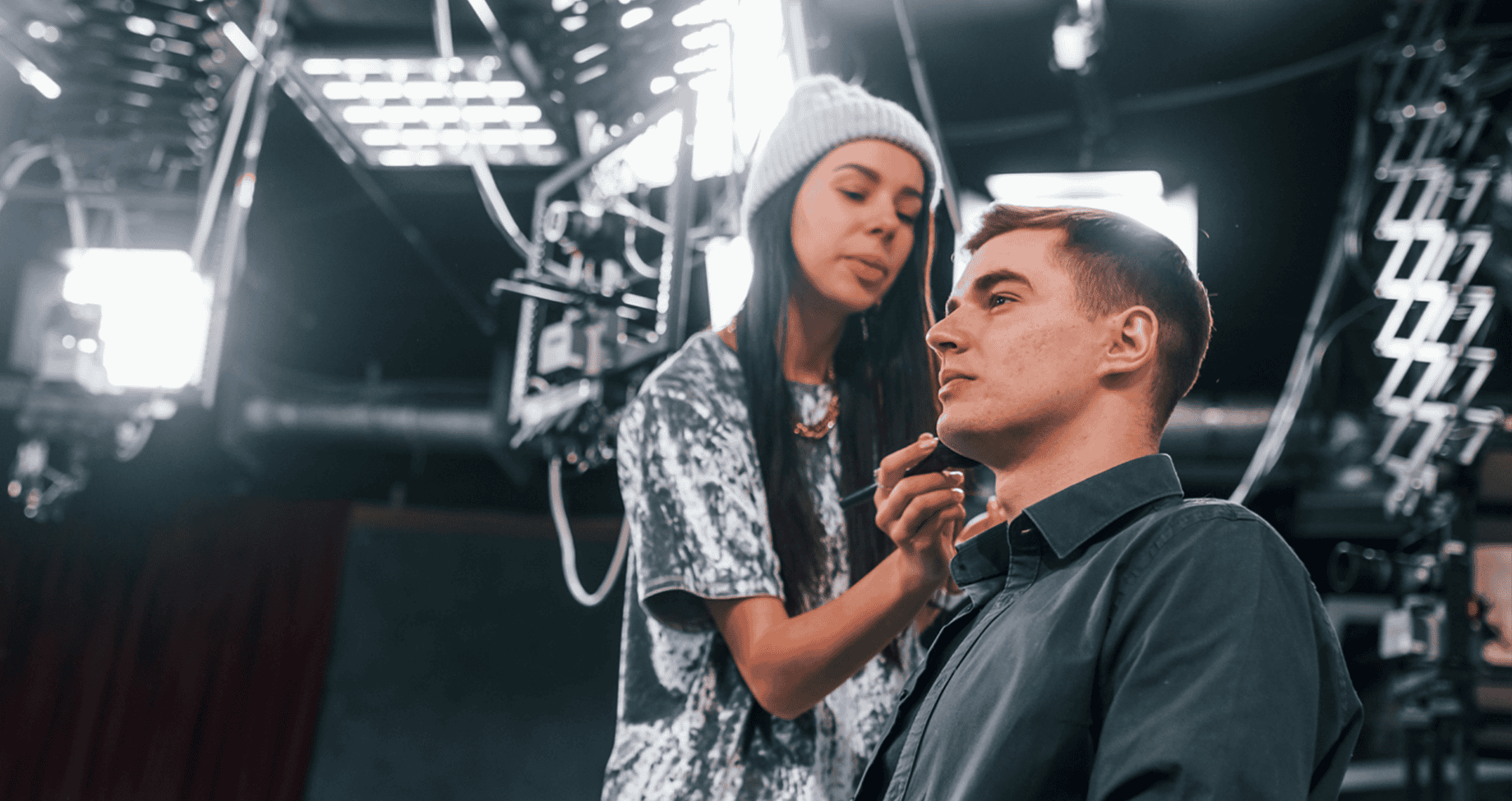
- A small crew (2–5 people)
- Camera, lighting, and audio gear
- Half-day or full-day shoot
- Professional editing
This tier balances production value and efficiency.
It’s where a lot of companies get strong results without overbuilding the project.
Tier 3: Full Commercial Production ($10,000+)
This is where things scale up quickly.
Typical examples:
- Broadcast commercials
- Campaign shoots
- Multi-location productions
What’s included:
- Larger crew (DP, AC, G&E, producer, etc.)
- Location rentals and permits
- Casting and talent
- Art direction and production design
- Advanced post-production (color, sound mix, VFX)
This tier delivers maximum production value, but also requires the most coordination and budget.
The Real Question: What Do You Actually Need?
Here’s where most people get it wrong:
They assume higher budget equals a better result.
But in reality, the right production level leads to the best result.
For example:
- A testimonial video doesn’t need a 10-person crew
- A social video doesn’t need a full commercial setup
- But a national campaign probably does
The key is matching the production to the goal.
A Smarter Approach to Video Production
The biggest shift happening in video production right now is this:
Companies are moving away from overbuilt, expensive productions and toward more efficient, repeatable systems.
For lean, remote testimonial and interview-style content, we approach this through Timonial, our sister company built specifically for scalable remote video production.
At Pitt Did It, we focus on traditional commercial and branded production, bringing together experienced crews, thoughtful planning, and high-end commercial execution when the project calls for it.
Across both approaches, the goal is the same:
- High-end output
- Smart, efficient execution
- Production that matches the needs of the project
So you can create the right content without overbuilding or overspending.
Final Thoughts
Video production in Seattle can cost anywhere from a few hundred dollars to tens of thousands.
But the real goal isn’t to spend more.
It’s to spend correctly.
When you match the production approach to the outcome, you get better results, faster, and more efficiently.
Planning a Project?
If you’re thinking about creating a video and want help figuring out the right approach,
Contact Pitt Did It:
https://www.pittdidit.com/contact
We’ll walk you through:
- Scope
- Budget
- Production approach
and help you land on something that actually makes sense.