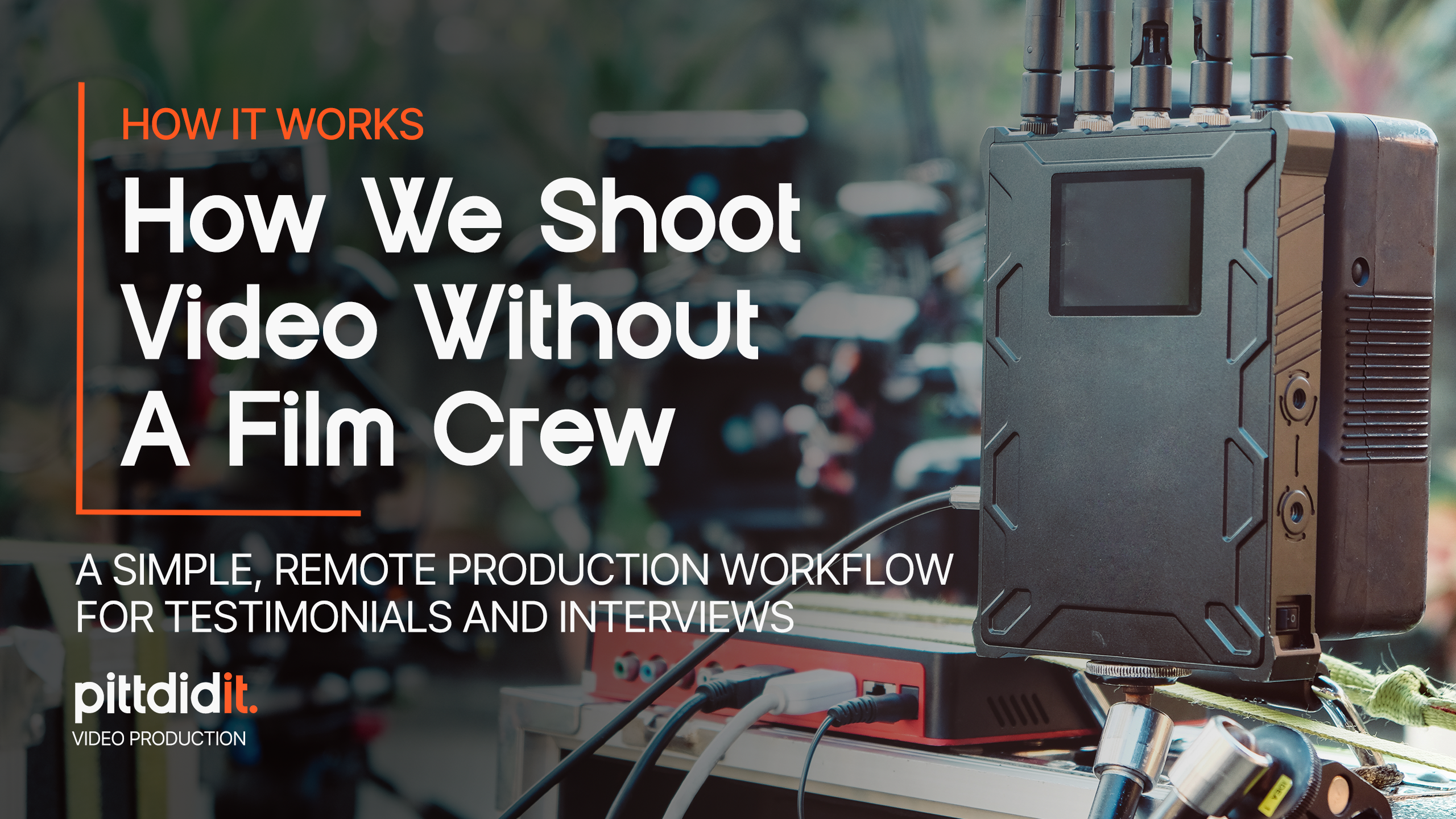
How We Shoot High-Quality Video Without a Film Crew
Most people assume that professional video production requires a full crew.
Camera operator. Sound. Lighting. Producer. Director.
And in many cases, that’s true.
But not always.
Over the past few years, we’ve built a different way to produce video. One that removes a lot of the friction without sacrificing quality.
Here’s how it works.
The Problem With Traditional Production
Traditional video production is powerful, but it comes with tradeoffs.
- Scheduling multiple people
- Travel and logistics
- Higher costs
- Limited flexibility
For larger commercial shoots, that makes sense.
But for certain types of content, it’s often more than what’s needed.
Where This Approach Works Best
This method isn’t for everything.
It works best for:
- Customer testimonial videos
- Founder interviews
- Internal communications
- Social and marketing content
Content where the goal is: clarity, authenticity, and speed
Not scale or spectacle.
The Core Idea
Instead of bringing a crew to the subject, we bring the production system to them.
That means:
- Camera
- Lighting
- Audio
- Teleprompter (if needed)
All pre-configured and shipped as a single kit.
Then we direct the shoot remotely.
Step 1: The Studio Ships to You
We send a compact video studio directly to the subject.
Everything is labeled, organized, and designed to be set up quickly.
No technical experience required.
Before the shoot, we’ll usually do a quick prep call to make sure everything is clear and ready.
Step 2: Live Remote Direction
At the scheduled time, we join the shoot over Zoom.
From there, we guide everything in real time:
- Camera framing
- Lighting adjustments
- Audio levels
- Performance and delivery
It’s essentially the same process as being on set, just without physically being there.
Step 3: Capture Multiple Takes
One of the biggest advantages of this approach is control.
We can:
- Refine answers
- Adjust tone
- Try different takes
- Keep things relaxed
Without the pressure of a full crew in the room.
Step 4: Professional Post-Production
Once the shoot is done, the footage is sent back to us.
From there, it goes through the full post pipeline:
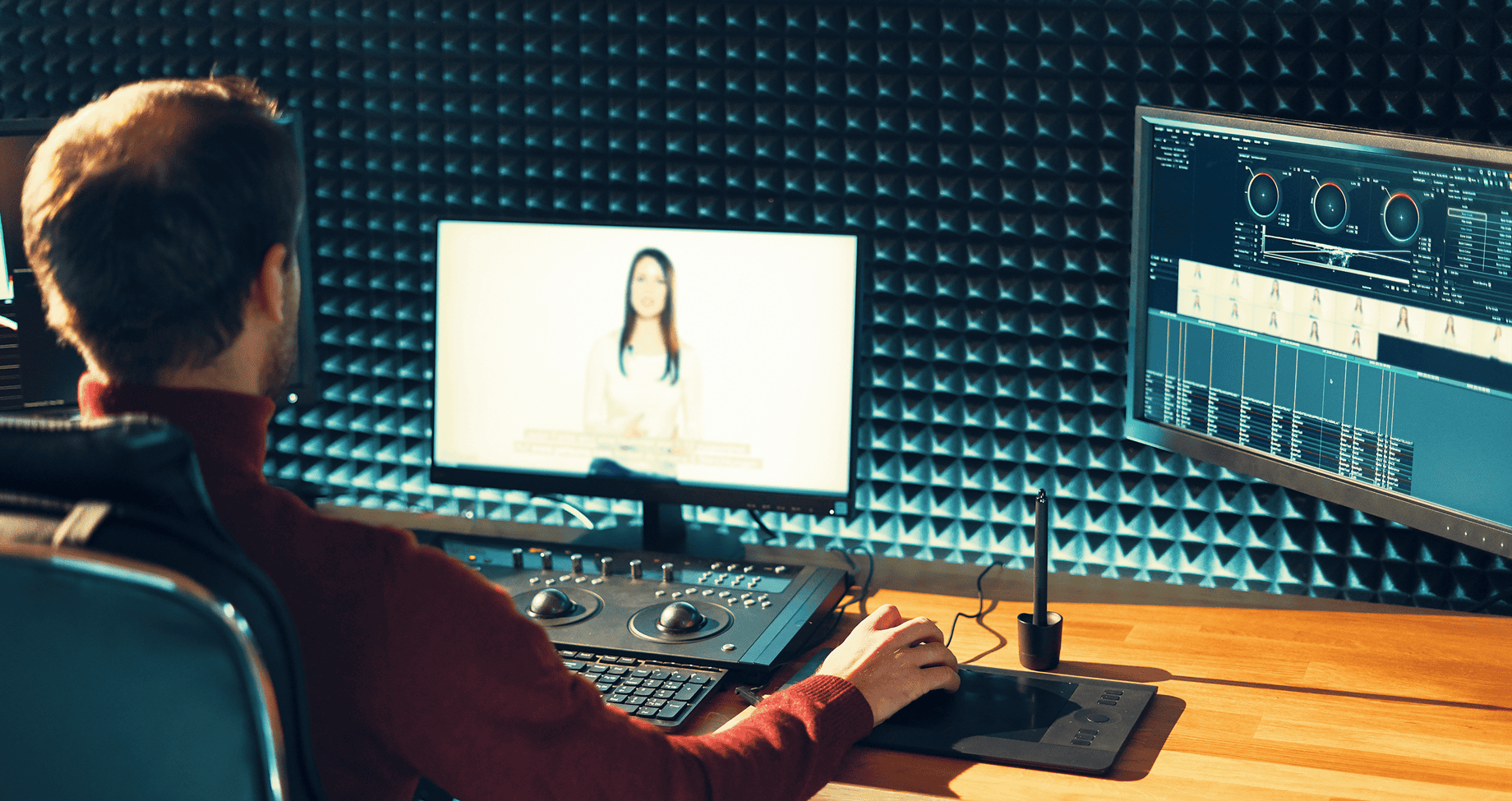
- Editing
- Color correction
- Sound cleanup
- Motion graphics (if needed)
The end result is a polished, professional video that feels like it was produced on set.
Why This Works
This approach works because it removes the parts of production that don’t add value for this type of content.
You’re not paying for:
- Travel
- Large crews
- Overbuilt setups
But you’re still getting:
- Direction
- Structure
- Quality control
When You Still Need a Crew
This isn’t a replacement for traditional production.
For projects like:
- Commercials
- Brand campaigns
- Multi-location shoots
- Complex visuals or storytelling
You still need a crew.
That’s where Pitt Did It comes in.
We handle those productions with a full team, built around the needs of the project.
Final Thoughts
Video production isn’t one-size-fits-all.
The best approach depends on what you’re trying to create.
Sometimes that means a full crew and a large production.
Sometimes it means a lean, remote setup that gets you 90% of the value with a fraction of the friction.
The key is knowing the difference.
Planning a Project?
If you’re trying to figure out what approach makes sense for your project,
Contact Pitt Did It:
https://www.pittdidit.com/contact
We’ll help you scope it, pressure test the idea, and land on a production approach that actually fits.